
From Gemma 4 to DeepSeek , How New Open-Weight LLMs Are Reducing Long-Context Costs
This Month's Tech Highlights
Trending Topics
Authentication and Authorization Bypass Vulnerabilities
high
A significant trend in recent security disclosures involves critical authentication and authorization bypasses, often stemming from logical flaws or incomplete enforcement mechanisms within web applications and API services.
Key Points:
Wordpress Temporary Login Plugin 1.0.0 is vulnerable to a 'temp-login-token' authentication bypass, leading to full account takeover (Headline 1).
CoinMate.io's API exhibits an HMAC signature verification flaw that omits endpoint and payload, enabling request forgery, and exposes financial data via POST /api/bitcoinWithdrawalFees without authentication (Headlines 7, 8).
Nextcloud's user_oidc module allows group restriction bypass via bearer tokens, as the SETTING_RESTRICT_LOGIN_TO_GROUPS is not enforced in the Backend::getCurrentUserId implementation (Headline 9).
These vulnerabilities highlight the persistent challenge of securely implementing and validating authentication and authorization logic, particularly in complex, distributed web application architectures.
Remote Code Execution and Privilege Escalation in Core Systems
high
Core system components, including operating system kernels and widely used libraries, continue to be targets for remote code execution (RCE) and local privilege escalation (LPE) exploits, demonstrating the critical need for robust low-level security.
Key Points:
Drupal's PostgreSQL integration is susceptible to SQL Injection, which can be escalated from SELECT-only access to full Remote Code Execution (Headline 2).
Multiple Linux Kernel vulnerabilities (CVE-2026-43284, CVE-2026-43500, CVE-2026-46300) allow for Local Privilege Escalation, indicating flaws in kernel-level access control or memory management (Headline 3).
Node.js is vulnerable to memory corruption via a Time-of-Check to Time-of-Use (TOCTOU) race condition in SharedArrayBuffer UTF-8 Decode (`StringBytes::Encode`), which could lead to arbitrary code execution (Headline 10).
The prevalence of RCE and LPE in fundamental software layers underscores the ongoing importance of secure coding practices and rigorous auditing at the system level.
TLS/SSL Verification Flaws and Network Protocol Vulnerabilities
high
Insecure handling of TLS/SSL verification and other network protocol configurations continues to introduce critical vulnerabilities, enabling man-in-the-middle attacks and data interception.
Key Points:
curl exhibits a TLS verifyhost bypass in rustls, mbedTLS, and wolfSSL when `verifypeer=0`, allowing an attacker to spoof the server identity (Headline 5).
Another curl vulnerability allows TLS peer-verification bypass via mid-transfer `ssl_config` mutation, indicating a race condition or improper state management during connection establishment (Headline 6).
PAN-OS CAS Authentication Bypass (CVE-2026-0265) highlights a critical flaw in network device authentication, potentially allowing unauthorized access to network infrastructure (Headline 4).
These issues emphasize the necessity for strict adherence to secure TLS configurations and robust state management within network communication libraries and devices.
Artificial Intelligence and Machine Learning in Practical Applications
high
The integration of Artificial Intelligence and Machine Learning is expanding into practical, real-world applications, from sports officiating to surveillance, demonstrating both its potential and the ethical considerations involved.
Key Points:
The NBA plans to implement an AI system for automatic out-of-bounds calls, indicating a move towards automated officiating in sports (Headline 25).
A journalist successfully used facial recognition software to spot a fugitive terrorist, showcasing the practical application of AI in law enforcement and intelligence (Headline 17).
The Pentagon acknowledges that US military personnel are being targeted using commercial location data, which often leverages AI for aggregation and analysis, raising privacy concerns (Headline 12).
While AI offers significant advancements in various sectors, its deployment necessitates careful consideration of accuracy, bias, and privacy implications, especially in sensitive applications.
Complex Logic Flaws and Race Conditions in Web Applications
high
Modern web applications are increasingly susceptible to complex logic flaws and race conditions, which can be exploited to achieve high-impact outcomes like privilege escalation or data exposure.
Key Points:
Rocket.Chat's Autotranslate DDP Method exposes private messages without authentication or room access checks, indicating a severe authorization bypass due to a logic flaw (Headline 11).
A race condition in Querybook allowed the creation of 20 super-admins in 1 second, demonstrating how timing vulnerabilities can lead to massive privilege escalation (Headline 13).
An Axios security patch (CVE-2026–42043) was bypassed through a '16-Million IP Loophole', indicating that even patched vulnerabilities can be re-exploited due to incomplete fixes or complex interaction logic (Headline 23).
These incidents underscore the critical need for thorough architectural reviews, robust concurrency control, and comprehensive testing to identify and mitigate subtle logic and timing-dependent vulnerabilities in web application development.
Key Terms
Supply Chain Attacks
Critical Infrastructure Vulnerabilities
Geopolitical Tensions in Space
AI Security Risks
Kernel Exploits
Remote Code Execution (RCE)
Data Breaches and Ransomware
AI Investment and Competition
AI Regulation and Ethics
Quantum Computing Breakthroughs
State-Sponsored Cyber Warfare
Exploitation of Popular Software
Social Engineering and Malware
Related Articles

Recent Developments in LLM Architectures: KV Sharing, mHC, and Compressed Attention
CVE-2026-0300 | Palo Alto Networks PAN-OS Remote Code Execution | Critical Remote Access Risk
CVE-2026-0300 enables unauthenticated remote code execution in PAN-OS, posing a critical risk to enterprise and government networks.
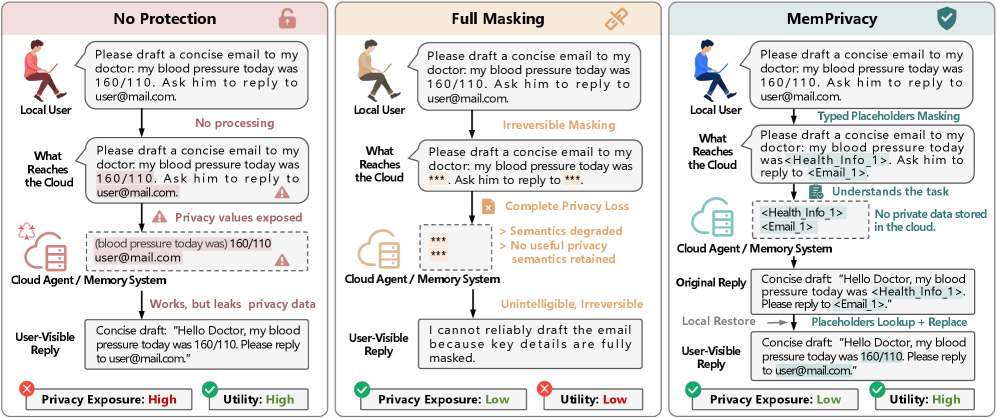
Can your AI agent remember your secrets without the cloud ever seeing them?
MemPrivacy: Privacy-Preserving Personalized Memory Management for Edge-Cloud Agents
Thinking carefully before adopting agentic AI
When it comes to using agentic AI, make sure you can walk before you run.
NASA’s new AI space chip could let spacecraft think for themselves
NASA is testing a next-generation space computer chip that could give spacecraft the ability to operate far more independently in deep space. The radiation-hardened processor is showing performance le...
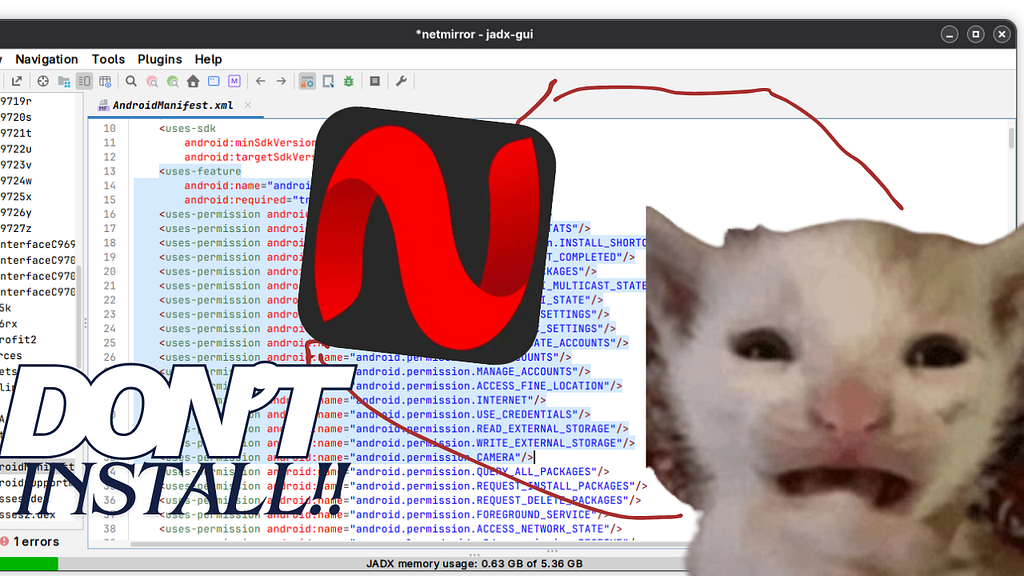
I Reverse Engineered this Android Application and here’s what i found!
Yo, everyone, This is Alham Rizvi and welcome to another crazy write-up. Today I wasted like 3 hours analyzing the decompiled and reverse-engineered code of a modded application from an OTT platform c...
[local] Windows Snipping Tool - NTLMv2 Hash Hijack
Windows Snipping Tool - NTLMv2 Hash Hijack
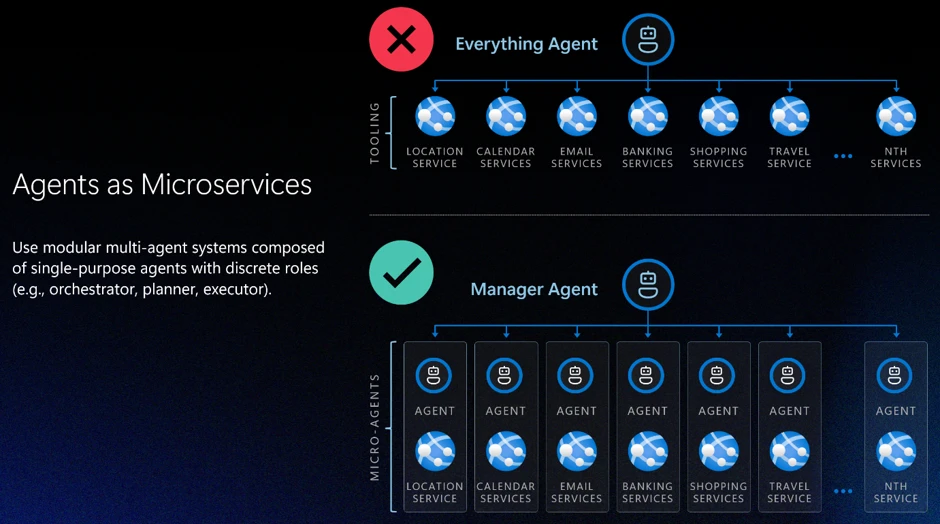
Defense in depth for autonomous AI agents
As AI agents gain autonomy, defense in depth must evolve, with application-layer design, identity, and human oversight at the center. The post Defense in depth for autonomous AI agents appeared first ...
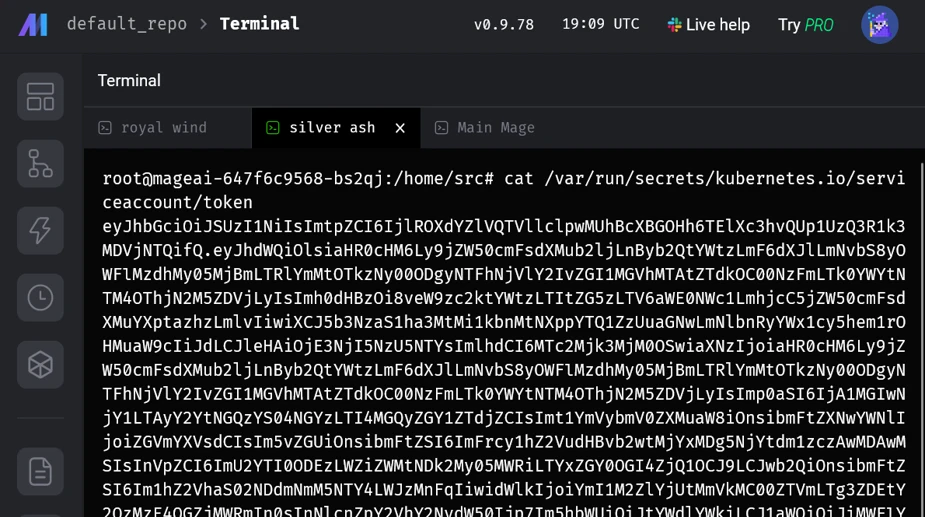
When configuration becomes a vulnerability: Exploitable misconfigurations in AI apps
Exposed UIs, weak authentication, and risky defaults could turn cloud-native AI apps on Kubernetes into potential targets by threat actors. Learn how exploitable misconfigurations lead to RCE and data...

The Evolution of PAM: From Password Vaults to JIT Access
TL;DR: Privileged Access Management (PAM) was originally designed to solve a very real problem: credential sprawl. In most environments, admin

How Hackers Actually Earn Passive Income With Recon
Hi, I’m Vipul 👋 — the human behind TheHackersLog Continue reading on InfoSec Write-ups »
Physical AI moves closer to factory floors as companies test humanoid robots
British technology company Humanoid will deploy humanoid robots at factories operated by German industrial supplier Schaeffler, Reuters reported. The two companies’ agreement covers an estimated 1,000...
Mona, tellme - AI-assisted analysis 🧠
With mona , debugger automation took a major leap forward. Now, with the new tellme / ai command, mona can collect crash context, heap information, registers, call stacks, disassembly, memory mappings...
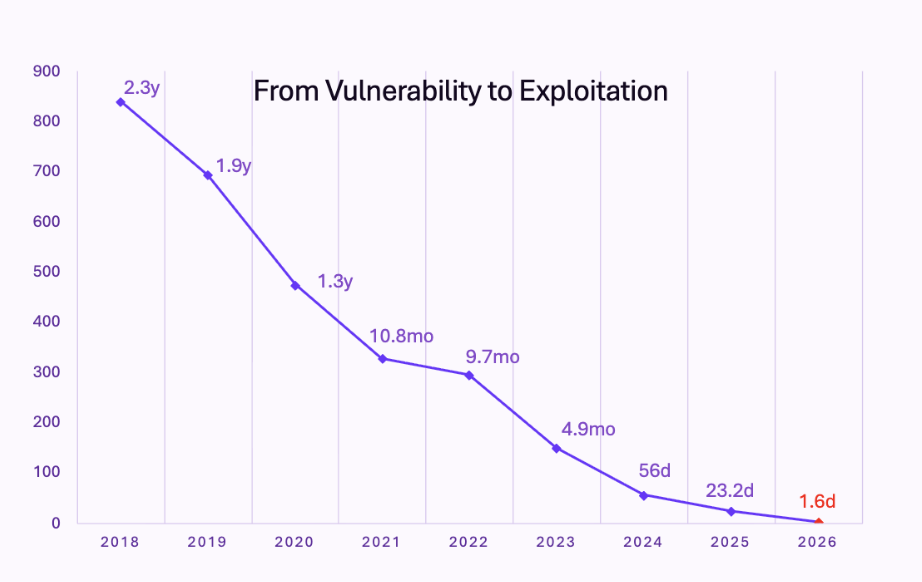
Something’s Wrong With Your Code. And Attackers Know It.
Checkmarx CEO Sandeep Johri shares insights from a recent conversation with the New York Stock Exchange (NYSE) on how AI is reshaping modern codebases.
Kukurigu LPE - Linux Kernel Privilege Escalation (CVE-2026-43284 / CVE-2026-43500)
Topic: Kukurigu LPE - Linux Kernel Privilege Escalation (CVE-2026-43284 / CVE-2026-43500) Risk: Medium Text:# Titles: Kukurigu LPE - Linux Kernel Privilege Escalation (CVE-2026-43284 / CVE-2026-43500)...

mimalloc: A new, high-performance, scalable memory allocator for the modern era
mimalloc is an open-source, modern, scalable memory allocator that is a drop-in replacement for malloc and free. It is relatively small (~12K lines), with clear internal data structures, and is easy t...
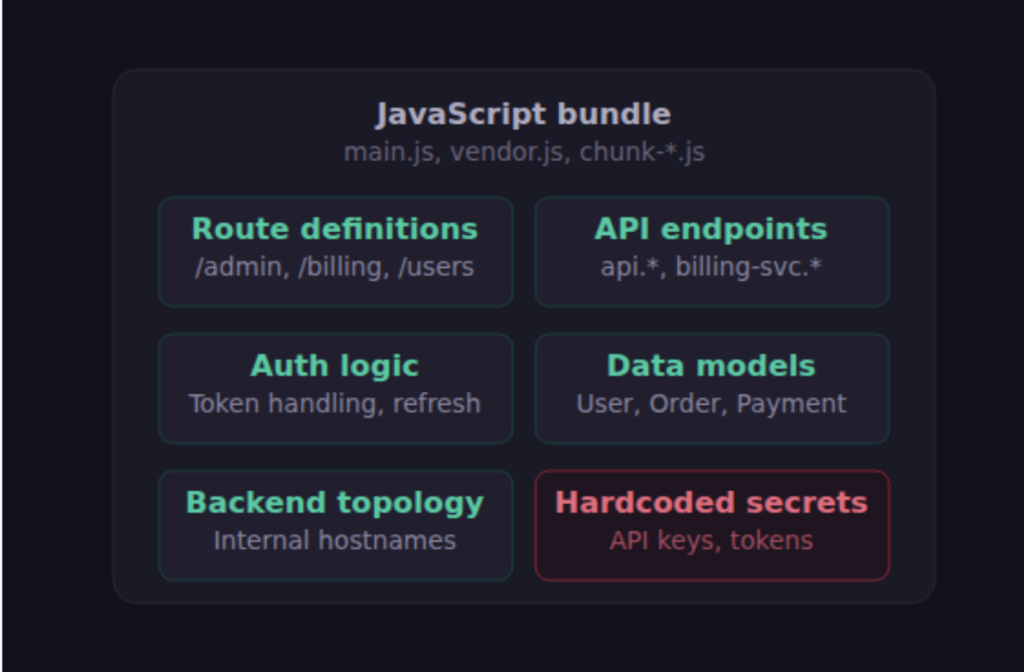
Your Login Page Is Lying: What AI Agents Find When They Read Your Frontend
TL;DR: Single-page applications ship their entire frontend codebase to every visitor, including unauthenticated ones. Even a login page with no visible functionality delivers JavaScript bundles contai...

How to Identify and Exploit New Vulnerabilities
In the ever-evolving world of cybersecurity, staying ahead of the curve is not just a goal—it’s a necessity. As new vulnerabilities emerge, the race to identify and mitigate them begins. But how do we...
Hermes Unlocks Self-Improving AI Agents, Powered by NVIDIA RTX PCs and DGX Spark
Agentic AI is changing the way users get work done. Following the success of OpenClaw, the community is embracing new open source agentic frameworks. The latest is Hermes Agent, which crossed 140,000 ...
New quantum algorithm solves “impossible” materials problem in seconds
A new quantum-inspired algorithm has cracked a problem so massive that conventional supercomputers struggle to even approach it. Researchers used the method to simulate extraordinarily complex quantum...