
LoopCoder-: Only Loop Once for Efficient Test-Time Computation Scaling
This Month's Tech Highlights
Trending Topics
Supply Chain Security in CI/CD
high
Recent incidents highlight critical vulnerabilities in CI/CD pipelines, specifically targeting GitHub Actions workflows and their implications for downstream software distribution.
Key Points:
DuckDuckGo experienced an RCE and supply chain attack through `pull_request_target` in `content-scope-scripts/semver-label.yml`, affecting all DuckDuckGo browsers.
Another DuckDuckGo incident involved RCE and PAT exfiltration via `pull_request_target` in `privacy-configuration/auto-respond-pr.yml`, indicating a direct supply chain compromise to all DDG browsers.
The curl project's `libcurl` vulnerability involving bare LF bytes in HTTP/1.x response headers could lead to cookie jar pollution and POST body/credential exfiltration via redirects, demonstrating risks in fundamental network libraries.
These events underscore the necessity for robust validation mechanisms and least-privilege principles within automated build and deployment environments to prevent widespread compromise.
AI Hardware and Infrastructure Investment
high
Global powers are significantly increasing investments in AI chip manufacturing and related infrastructure to secure a competitive edge in the rapidly evolving AI landscape.
Key Points:
South Korea announced a substantial $576 billion AI chip push, involving major players like Samsung and SK Hynix, signaling a national strategic focus on semiconductor dominance.
Japan is addressing its worker shortage by developing an AI model designed to manage 10 million robots, indicating a large-scale deployment of AI-driven automation requiring significant computational resources.
The Pentagon's AI platform saw a massive user increase from 80,000 to 1.5 million in six months, demonstrating a rapid scaling of AI adoption within critical government infrastructure.
These investments are critical for fostering innovation, ensuring national security, and maintaining economic competitiveness in the era of pervasive artificial intelligence.
AI Model Training Data and Copyright
high
The increasing reliance on vast datasets for AI model training has ignited significant legal and ethical debates concerning intellectual property rights and data sourcing.
Key Points:
An investigation by The Atlantic revealed that millions of songs have been used for AI music training, raising questions about copyright infringement and artist compensation.
A judge ruled that a porn company can sue Meta for torrenting its adult films for AI training, setting a precedent for intellectual property rights in AI data acquisition.
Musk's trade secret case against OpenAI has been permanently dismissed, highlighting the complexities and challenges in litigating intellectual property disputes within the AI sector.
The resolution of these legal challenges will profoundly shape the future landscape of AI development, dictating how data is acquired, utilized, and compensated.
Server-Side Request Forgery (SSRF) Vulnerabilities
high
Multiple critical vulnerabilities have been identified in widely used applications, demonstrating persistent challenges in preventing Server-Side Request Forgery (SSRF) attacks through improper input validation and redirect handling.
Key Points:
Rocket.Chat was found to be vulnerable to SSRF via improper validation after DNS name resolution in its link-preview feature, allowing attackers to access internal network resources.
Another Rocket.Chat SSRF vulnerability was identified due to improper redirect validation in its oEmbed function, enabling attackers to bypass security controls and make arbitrary requests.
Rocket.Chat also exhibited an unauthenticated file reading vulnerability via livechat authentication and MongoDB ObjectId() prediction, which could be chained with SSRF for broader impact.
These recurring SSRF issues underscore the critical need for comprehensive input sanitization, robust URL parsing, and strict network segmentation to mitigate risks in web applications.
AI's Impact on Digital Sovereignty and Regulation
high
The rapid advancement and deployment of AI technologies are compelling nations to re-evaluate their digital sovereignty strategies and implement new regulatory frameworks.
Key Points:
AI is significantly reshaping Europe's digital sovereignty debate, as nations seek to control their data, infrastructure, and algorithmic decision-making processes.
Britain unveiled sweeping bans on social media for children under 16, potentially imposing overnight curfews, reflecting a growing trend of governmental intervention in digital spaces driven by societal concerns.
Anthropic's new AI fight with the White House indicates increasing governmental scrutiny and potential regulatory actions against leading AI developers.
These regulatory shifts are indicative of a global effort to balance technological innovation with national interests, ethical considerations, and public welfare in the age of AI.
Key Terms
Supply Chain Attacks
AI National Strategy & Investment
Robotaxi Development
Critical Vulnerabilities (SSRF, RCE, LPE)
AI's Impact on Digital Sovereignty
AI Adoption in Government/Military
AI Training Data & Copyright
Social Media Regulation for Minors
Ad Blocker Limitations
Tech Mergers & Acquisitions
Browser Security Flaws
AI Ethics & Governance
Workforce Automation
Related Articles
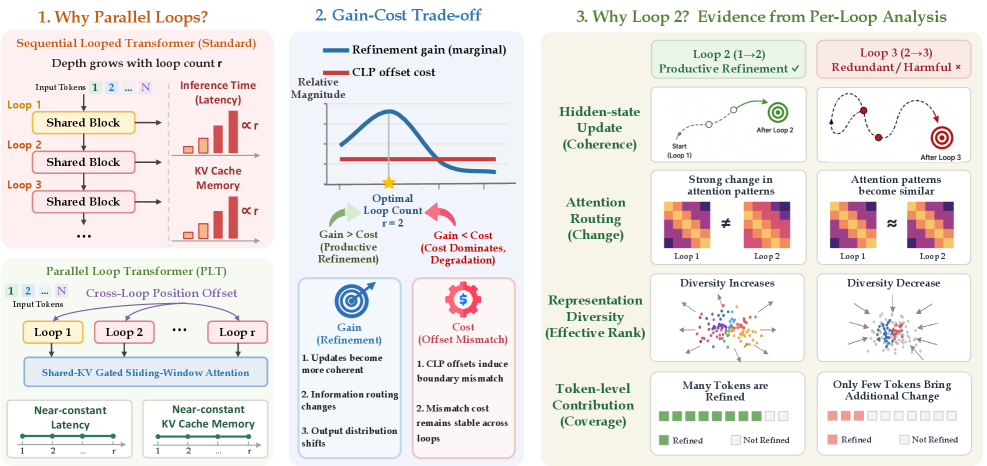
Why build a bigger model when you can just loop twice for twice the power?
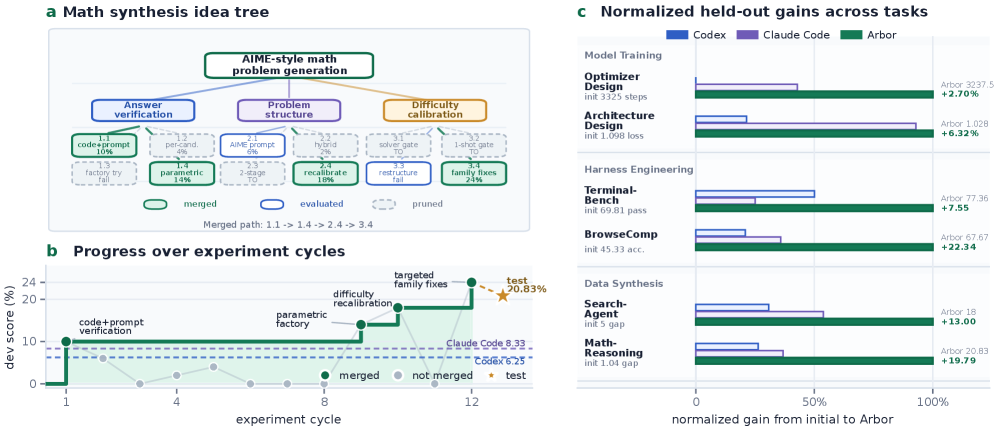
Can an AI agent run the entire scientific method without human supervision?
Toward Generalist Autonomous Research via Hypothesis-Tree Refinement
Supercharging LLM inference on Google TPUs: Achieving 3X speedups with diffusion-style speculative decoding
Researchers at UCSD have successfully implemented DFlash, a block-diffusion speculative decoding method, on Google TPUs to bypass the sequential bottlenecks of traditional autoregressive drafting. By ...
Build Long-running AI agents that pause, resume, and never lose context with ADK
How to transition from stateless chatbots to production-grade agents capable of managing long-running enterprise workflows, such as HR onboarding, that span days or weeks. It introduces the Agent Deve...
Announcing Genkit Middleware: Intercept, extend, and harden your agentic apps
Genkit is an open-source framework designed to help developers build production-ready, agentic AI applications using TypeScript, Go, Dart, and Python. The framework utilizes a powerful middleware syst...
curl: OpenSSL TLS 1.2 session resumption accepts expired server certificates in libcurl
curl: OpenSSL TLS 1.2 session resumption accepts expired server certificates in libcurl
7 layers of security every AI agent needs before going to production
We keep seeing the same pattern team ships an agent, agent works great in testing, agent gets prompt injected in production within the first week. 73% of production AI deployments showed prompt inject...

Anthropic Explains How Claude Builds Its Own Execution Harnesses
Anthropic has published additional details about the orchestration system behind Claude Code's recently introduced Dynamic Workflows, highlighting how the feature generates custom execution harnesses ...
Factoring "short-sleeve" RSA keys with polynomials
submitted by /u/tnavda [link] [comments]

Introducing Gemma 4 models on Amazon Bedrock
Today, we are announcing the availability of the Gemma 4 family on Amazon Bedrock. Built by Google DeepMind and released under the Apache 2.0 license, Gemma 4 is a family of open-weight models designe...
GitHub Copilot CLI for Beginners: Overview of common slash commands
GitHub Copilot CLI for Beginners: Learn how to use slash commands to control your terminal AI agent. The post GitHub Copilot CLI for Beginners: Overview of common slash commands appeared first on The ...
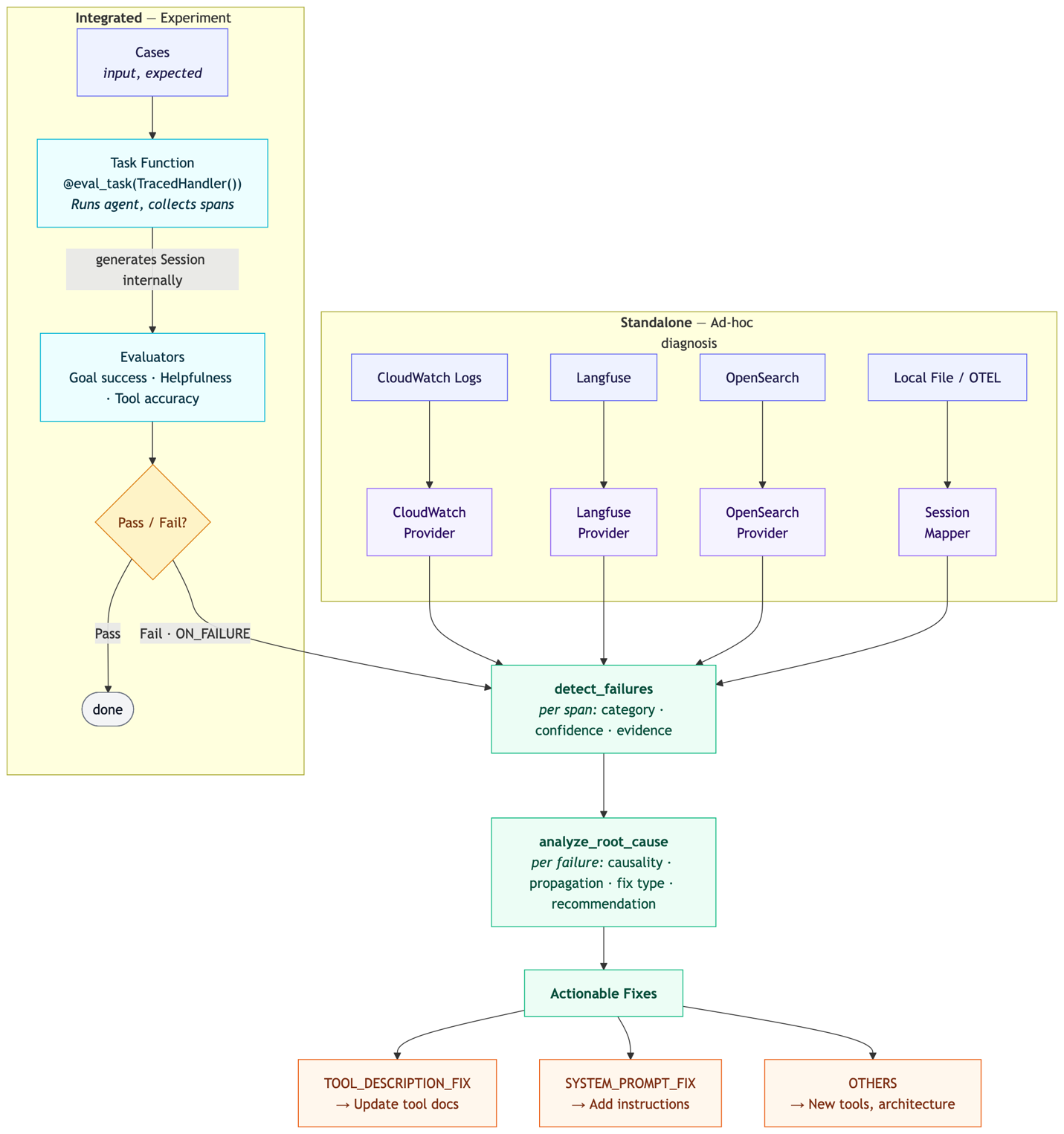
AI Agent Failure Detection and Root Cause Analysis with Strands Evals
In this post, we walk you through calling the detector functions to diagnose real agent failures. You learn how to interpret their structured output: categorized failures with confidence scores, causa...
GitHub - Zypherion-Technologies/HallWatch: Usermode detector that catches indirect syscalls.
submitted by /u/AhmedMinegames [link] [comments]
CVE-2026-48558 | SimpleHelp OIDC Authentication Bypass Vulnerability
CVE-2026-48558 is an authentication bypass vulnerability affecting SimpleHelp OIDC deployments. The flaw may allow attackers to create unauthorized Technician accounts and gain privileged access to ma...

What Changed in OWASP Top 10 2025 and Recommendations for Each Category
Key Takeaways The list introduces two new categories – Software Supply Chain Failures (A03) and Mishandling of Exceptional Conditions (A10) – reflecting attacks already happening in production. Securi...
Windows Defender (MsMpEng.exe) Race Condition -> LPE / SYSTEM / Use-After-Free -> Crash
Topic: Windows Defender (MsMpEng.exe) Race Condition -> LPE / SYSTEM / Use-After-Free -> Crash Risk: Medium Text:# Titles: Windows Defender (MsMpEng.exe) Race Condition -> LPE / SYSTEM / Use-After-Fre...

Why OT Incident Response Fails When You Apply IT Rules
OT incident response requires a fundamentally different approach than IT IR. Learn why safety, availability, and operational context change everything.