

GitHub: GitHub user to server tokens can create issues in any public repository

This Month's Tech Highlights
Trending Topics
Advanced LLM Architectures and Operationalization
high
The current technological landscape indicates a significant focus on developing and deploying sophisticated Large Language Model (LLM) architectures, emphasizing real-time capabilities, continuous operation, and autonomous optimization.
Key Points:
A blueprint for real-time, enterprise-ready LLM deployments outlines strategies for integrating LLMs into production environments, focusing on performance and scalability.
LiveMem addresses the challenge of maintaining memory state continuity in long-running LLM inference, crucial for persistent conversational agents and complex task execution.
Self-Evolving Recommendation Systems leverage LLM agents for end-to-end autonomous model optimization, demonstrating a shift towards self-improving AI systems in production.
These advancements highlight a trend towards more robust, self-managing, and continuously learning LLM systems, moving beyond static model deployments to dynamic, adaptive AI infrastructures.
AI Agentic Systems and Self-Healing Architectures
high
The emergence of agentic AI systems and self-healing architectures signifies a critical evolution in AI, enabling autonomous operation, error detection, and remediation within complex data and AI pipelines.
Key Points:
Agentic Self-Healing for Data and AI Pipelines proposes an affordable, vendor-agnostic architecture utilizing open-source software to automatically detect and resolve issues.
Real-Time Detection and Repair of LLM Agent Failures focuses on the immediate identification and correction of operational errors in LLM-driven agents, enhancing reliability.
Self-Improving Large Language Models via Progressive Experience Evolution demonstrates how LLMs can autonomously refine their performance through iterative learning from experience.
This trend underscores a move towards more resilient and autonomous AI systems capable of managing their own operational integrity and continuous improvement, reducing human intervention.
Deep Learning for Predictive Analytics and Risk Assessment
high
Deep learning methodologies are increasingly being applied to complex predictive analytics and risk assessment tasks across various domains, demonstrating superior performance in identifying patterns and forecasting outcomes.
Key Points:
Predictive Maintenance utilizes Deep Learning-Based Remaining Useful Life Prediction for Combat Aircraft Engines, optimizing maintenance schedules and operational safety.
Empowering Credit Risk Detection in Weixin Pay with Billion-Scale Deep Graph Learning showcases the application of advanced graph neural networks for financial fraud and risk detection.
Development and Validation of a Dynamic Kidney Failure Prediction Model based on Deep Learning provides a real-world application of deep learning in clinical prognostics.
These applications highlight the transformative potential of deep learning in enhancing predictive accuracy and enabling proactive decision-making in critical sectors like defense, finance, and healthcare.
Trustworthy AI and Explainability
high
The growing deployment of AI systems necessitates a strong emphasis on trustworthiness, encompassing robustness, explainability, and ethical considerations, particularly in sensitive applications.
Key Points:
Trustworthy AI in Digital Health provides a comprehensive review of robustness and explainability, crucial for AI adoption in medical diagnostics and treatment.
Paris as a 15-Minute City: An Explainable AI Perspective explores the use of explainable AI to justify and understand urban planning decisions, fostering public trust.
Quality-Diversity Red-Teaming focuses on Automated Generation of High-Quality and Diverse Attackers for Large Language Models, aiming to improve model robustness against adversarial inputs.
This focus on trustworthy AI is paramount for ensuring responsible and effective integration of AI into societal and critical infrastructure, addressing concerns around bias, transparency, and reliability.
AI in Defense and Geopolitical Strategy
high
The integration of AI into defense systems is rapidly advancing, with a clear geopolitical dimension, as nations leverage AI for strategic advantage and operational efficiency.
Key Points:
A U.S. company's AI enables Ukraine's cheap kamikaze drones to track targets autonomously, indicating a significant shift in military capabilities and drone warfare.
The Trump Administration is drafting a ban on Chinese data center devices, reflecting concerns over national security and data sovereignty in critical infrastructure.
Predictive Maintenance: Deep Learning-Based Remaining Useful Life Prediction for Combat Aircraft Engines highlights the application of AI to enhance the operational readiness and longevity of military assets.
These developments underscore the increasing role of AI as a strategic asset in defense and international relations, influencing military capabilities, supply chain security, and geopolitical power dynamics.
Key Terms
AI in Warfare/Defense
Cybersecurity Vulnerabilities
Government Tech Regulation/Policy
Data Privacy/Encryption Battles
AI/LLM Development & Deployment
AI for Enterprise/Business Solutions
AI in Healthcare/Biotech
AI for Urban Planning/Smart Cities
AI for Predictive Analytics
Open Source & Vendor Agnostic Solutions
LLM Agent Reliability & Self-Correction
Trustworthy & Explainable AI
Human-Robot Interaction/Ethics
AI Model Optimization & Evolution
Related Articles
GitHub: GitHub user to server tokens can create issues in any public repository
TP-Link NX510v - Root Access, UART, Bootloader, Firmware Research
submitted by /u/Jeffry84 [link] [comments]
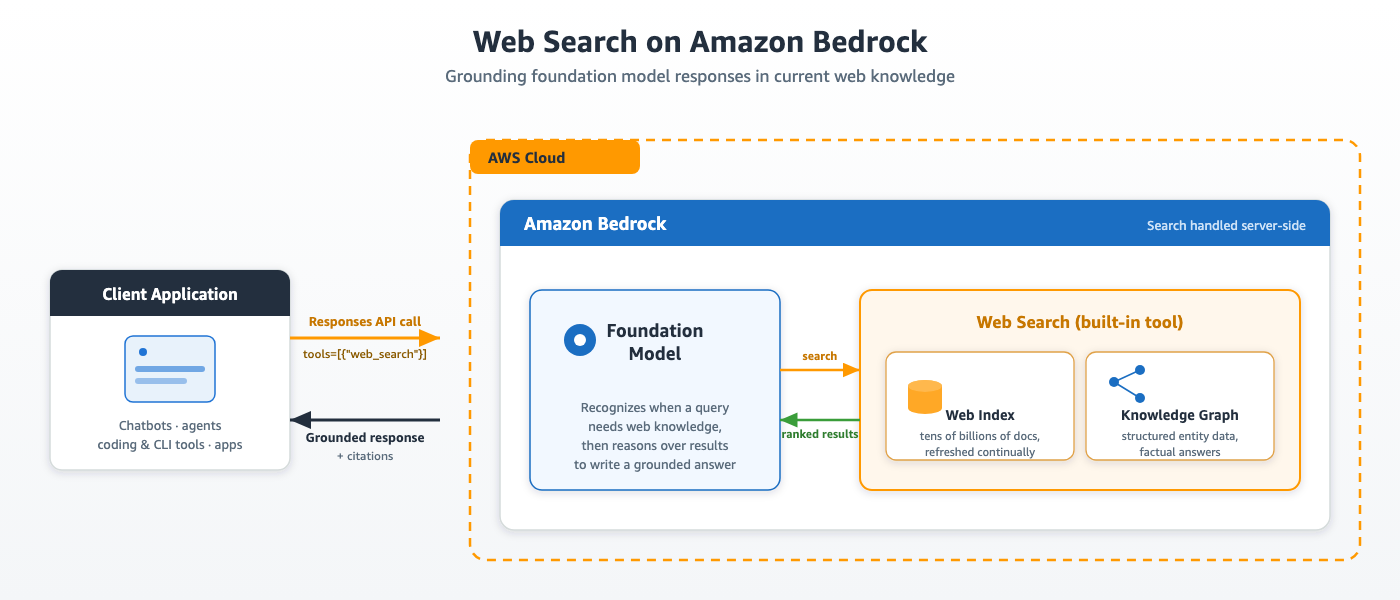
Introducing Web Search on Amazon Bedrock for foundation model grounding
Today, we are introducing the general availability of Web Search on Amazon Bedrock. It is a server-side built-in tool that grounds model responses in current web knowledge. With Web Search, grounding ...
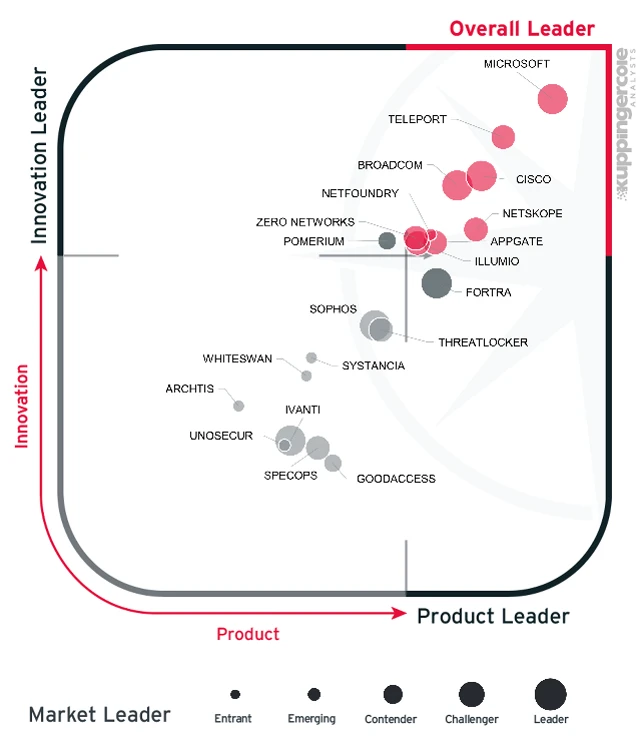
Advance Zero Trust for AI: New tools and guidance to secure AI agents and DevSecOps
Microsoft expands its Zero Trust for AI strategy to enhance security for AI and DevSecOps environments with new tools and guidance. The post Advance Zero Trust for AI: New tools and guidance to secure...

NVIDIA Alpamayo 2 Super, the Frontier Open Model for Robotaxis and Autonomous Vehicles, Now Available for Commercial Use
For robotaxis and other autonomous vehicles (AVs), the hardest problems aren’t the everyday scenarios. They’re the rare, complex situations that are difficult to anticipate and train for. Handling the...
Case study: How Burp AT helped expose whistleblower reports via a critical vulnerability that was overlooked for years
"It feels like I get 10X the productivity on an engagement. The difference is night and day." Profile Ray H. is a Security Analyst at a managed security service provider with over employees world

I Replaced Pip, Virtualenv, and Poetry With uv: Here’s Why
uv is making my life easier by giving me one fast tool for package installation, virtual environments, lock files, Python versions, and running project commands.
Proposing the SAFE Working Group: An Open Community Effort to Improve AI Security
The open source community has shown time and again that collaboration produces better software, stronger security, and more resilient infrastructure. As AI becomes increasingly integrated into enterpr...
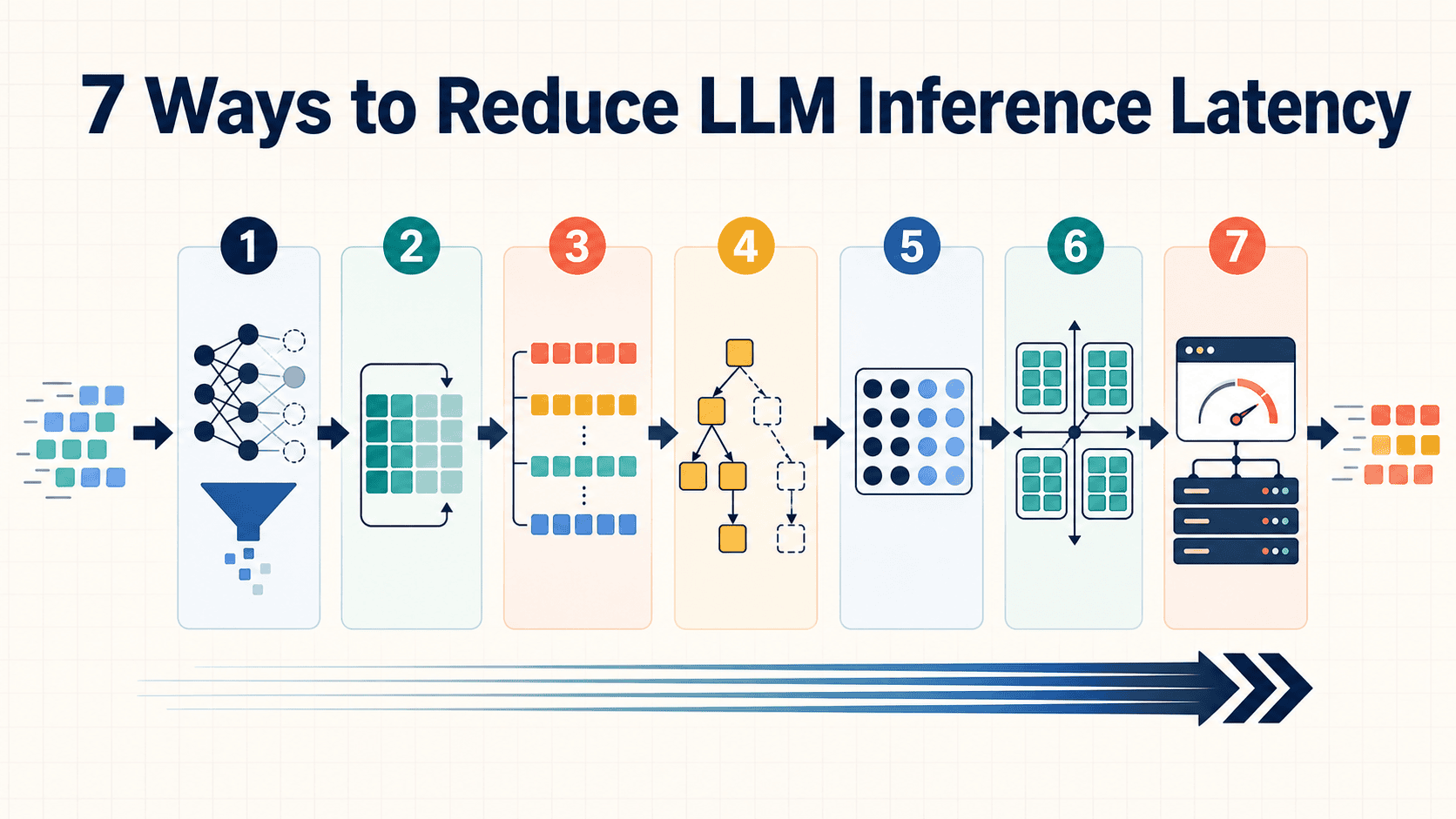
7 Approaches to Reduce Inference Latency in Your LLM Workflows
From quantization to speculative decoding, here are seven engineering strategies to ship faster, more responsive generative AI applications in production.
NCSC statement in response to recent incidents resulting from frontier AI evaluations
A statement from Ollie Whitehouse, Chief Technology Officer at the NCSC, on AI security following recent incidents.
We checked 1,237 fixes. One in four was not fixed.
Between October and August our clients sent 1,237 fixes back to us and asked us to confirm they worked. 307 of them did not.That is more than one in four. Not one in four findings — one in four fixes,...
Agentic Bayesian Optimization through Surrogate-Augmented Autoresearch
Bayesian optimization (BO) has become the standard tool for sample-efficient optimization and owes its efficiency to uncertainty-aware search driven by generic statistical priors. Richer domain priors...
TEngineDB-V: An OLAP-Native Vector Search System for Large-$k$ Workloads at Tencent
Vector search systems are essential infrastructure for modern data-driven applications. Large-$k$ analytical vector search, which retrieves $k=10^3$--$10^5$ results for analytics (e.g., aggregation, f...

Threat Modeling LLMs: Adam’s talk at Black Hat USA
Kymberlee Price, Shostack + Associates COO PHANTOM-B is a practical tool built for threat modeling AI systems This week at Black Hat USA, Adam gave a talk called "Threat Modeling LLMs: The PHANTOM-B A...
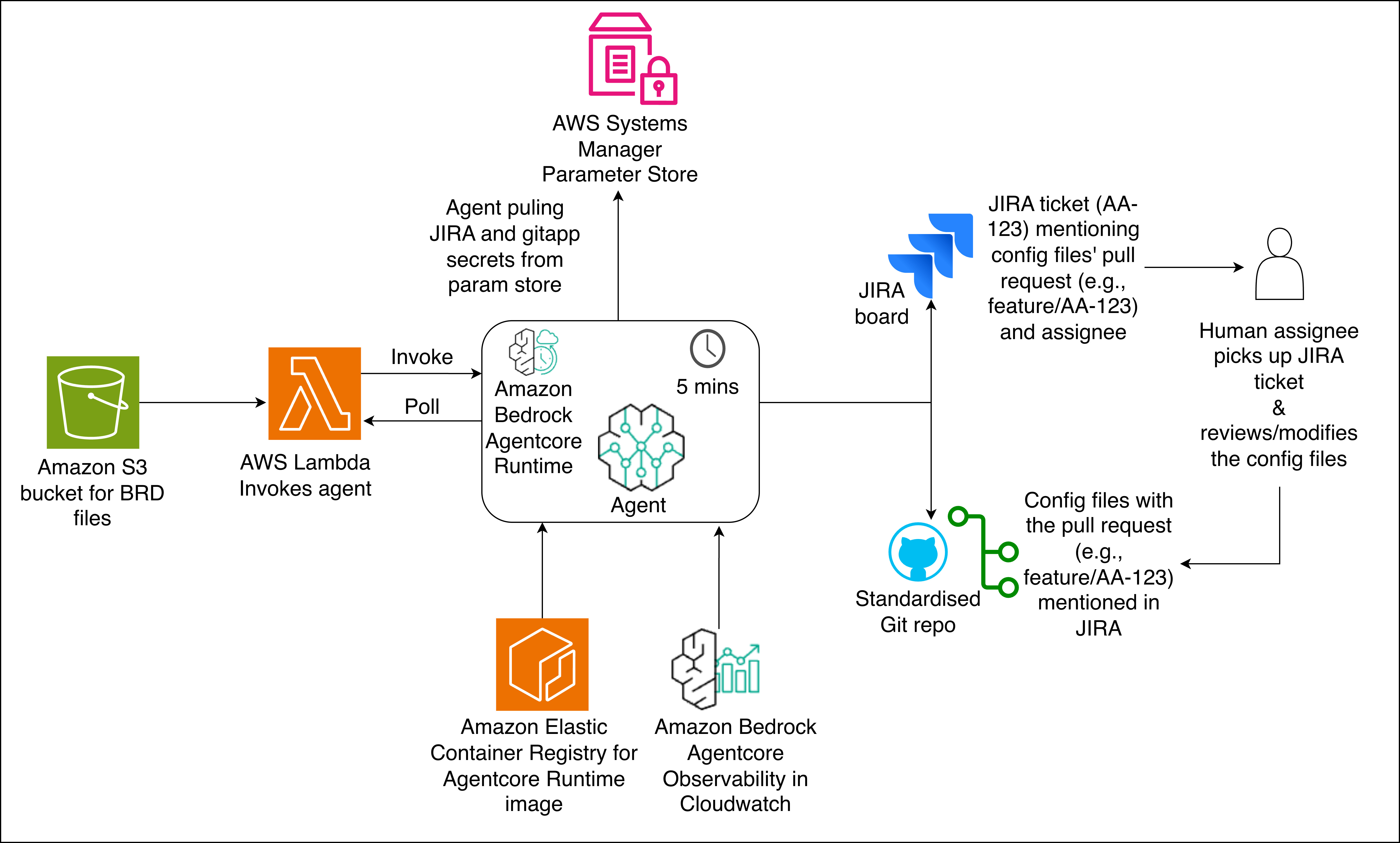
From weeks to minutes: How Formula 1® uses agentic AI on AWS to accelerate data operations
Formula 1® partnered with AWS to build the Data Accelerator, using agentic AI on Amazon Bedrock AgentCore to transform its MarTech data platform. Learn how F1 cut data source onboarding from up to 8 w...

Orchard: An open framework for scalable agentic AI
Orchard is an open-source framework for the research community to train and evaluate AI agents across task types. It reduces complexity while supporting strong performance from smaller models by enabl...

Alibaba Unveils Its ‘Most Powerful’ AI Model Yet
Qwen3.8-Max is the latest in a series of launches from Chinese tech firms racing to develop powerful, affordable AI models.
Linux Kernel 7.0-7.0.8 & 7.0-rc-7.0-rc7 - Use After Free Exploit
Topic: Linux Kernel 7.0-7.0.8 & 7.0-rc-7.0-rc7 - Use After Free Exploit Risk: High Text:CVE-2026-46215 Linux Kernel Use After Free Exploit - More Stable & Reliable for Linux 7.0-7.0.8 & 7.0-rc-7.0-rc7...

Active Directory Enumeration with BloodHound-Python
Overview BloodHound-python delivers a fast, cross-platform way to map the attack paths hidden inside an Active Directory environment. Instead of manually querying LDAP, dumping group The post Active D...

Cerebras and AMD partner to build the world’s fastest disaggregated AI inference solution
Disaggregated AI inference is proving to be more than a complementary answer to the prefill and decode bottleneck slowing enterprise AI at scale, and Cerebras and AMD just announced a partnership to b...