
World Labs Inc., the high-profile and well-funded artificial intelligence startup co-founded by the renowned computer vision pioneer Fei-Fei Li, has just dropped Atlas, which promises to be a game-cha...

This Month's Tech Highlights
Trending Topics
World Models and Advanced Spatial Intelligence
high
The development of sophisticated world models capable of simulating complex environments and interactions is a significant trend, pushing the boundaries of AI's understanding of physical and abstract spaces.
Key Points:
Motus2, a self-evolving general world model, is being developed for dexterous manipulation, indicating a focus on practical applications.
These advancements in world model architectures are crucial for enabling AI systems to operate with a deeper, more contextual understanding of their environments, paving the way for more robust and adaptable intelligent agents.
Autonomous AI Agents and Self-Evolving Systems
high
The emergence of autonomous and self-evolving AI agents signifies a shift towards systems capable of independent operation, learning, and adaptation across various domains.
Key Points:
CrowdStrike unveiled autonomous red teaming, indicating AI agents are being deployed for advanced cybersecurity operations.
Development of an Autonomous AI Coding Agent using Monte Carlo Tree Search (MCTS) and Gemini LLM Frameworks highlights the use of advanced search algorithms for agent development.
AutoScientist-Quant focuses on self-evolving coding agents for automatic research in quantitative investment, demonstrating agentic AI in financial modeling.
The increasing sophistication of autonomous and self-evolving agents, leveraging frameworks like MCTS and LLMs, is driving innovation in fields from cybersecurity to scientific research, demanding robust safety and alignment mechanisms.
LLM Alignment, Ethics, and Safety
high
As large language models become more powerful and pervasive, critical attention is being paid to their alignment with human values, ethical implications, and safety protocols, particularly concerning their autonomous capabilities.
Key Points:
The question of where 'good AGI' will come from is being addressed by institutions focused on the ethical development of advanced AI.
Preference Elicitation for Policy Optimization is being applied to align heart transplantation with human values, showcasing a practical application of alignment research.
Balancing Privacy, Utility, and Safety in LLM Alignment through Preference Optimization emphasizes the multi-faceted challenges in developing responsible AI.
The ongoing research into preference optimization and institutional frameworks for ethical AI development is paramount to ensuring that increasingly autonomous and intelligent systems operate safely and in accordance with societal values.
Edge AI and Local LLM Deployment
high
The ability to deploy large language models and other complex AI systems locally on consumer-grade hardware represents a significant advancement in democratizing access to powerful AI capabilities and enabling edge computing applications.
Key Points:
Local deployment facilitates 200k-scale protein-ligand virtual screening, demonstrating high-throughput scientific applications on edge devices.
Anthropic's Claude Fable 5.1 and Mythos 5.1 arrive with a 75% cost reduction for Fable cache reads, hinting at optimizations for efficient model inference, potentially on diverse hardware.
The optimization of LLMs for local deployment on consumer hardware is expanding the reach of advanced AI, enabling computationally intensive tasks at the edge and fostering innovation in fields like drug discovery.
AI in Cybersecurity and Defensive/Offensive Operations
high
AI is increasingly being integrated into both offensive and defensive cybersecurity strategies, with autonomous agents and advanced models enhancing capabilities for threat detection, response, and proactive security measures.
Key Points:
CrowdStrike unveiled autonomous red teaming, indicating AI's role in simulating adversarial attacks for security testing.
NVIDIA and CrowdStrike are strengthening the 'Agentic Cybersecurity Frontier,' highlighting collaboration in developing AI-powered security agents.
CrowdStrike launched SafeMind, incorporating both offensive and defensive AI models, demonstrating a comprehensive approach to AI in cybersecurity.
The strategic deployment of AI, including autonomous agents and specialized models, is revolutionizing cybersecurity by enabling more sophisticated threat analysis, proactive defense, and automated red teaming capabilities.
Key Terms
Advanced World Models
AI Agentic Systems
AI Ethics & Alignment
Cybersecurity Automation
AI in Legal Services
AI Infrastructure & Deployment
Privacy-Preserving AI
AI in Scientific Research
AI in Robotics & Embodiment
Large Language Model (LLM) Development
AI Copyright & IP Issues
Computational Social Science
AI in Healthcare
Related Articles
Fei-Fei Li’s World Labs debuts Atlas, a world model showcase for advanced spatial intelligence
When agents move at machine speed, security teams lose their lag time
The agentic AI attack surface is less a matter of new territory than of new velocity, as autonomous software now reads, writes and moves corporate content faster than any human adversary could. That s...

NVIDIA and CrowdStrike Strengthen Agentic Cybersecurity Frontier
“We’re at an inflection point in cybersecurity,” Jensen Huang told a sold-out crowd at CrowdStrike’s Fal.Con in Las Vegas Tuesday. Attacks are now automated. Defense has to be, too. The NVIDIA founder...

Anthropic R&D Slowdown Shows Need for Heightened AI Agent Security
The move comes after rival OpenAI paused development for two weeks following agent escapes.
Anthropic launches Claude Fable 5.1 after inking $35B cloud deal with Lambda
Anthropic PBC today debuted Claude Fable 5.1 and Claude Mythos 5.1, its most capable large language models to date. The launch comes a day after the company inked a $35 billion infrastructure deal wit...
CrowdStrike launches SafeMind with offensive and defensive AI models
CrowdStrike says it has launched SafeMind, a security-focused AI system with two models: Red Tempest looks for attack paths, while Blue Solano works to close them. The company says the system runs in ...

Introducing Claude Fable 5.1 on AWS
Claude Fable 5.1 is now available on Amazon Bedrock and Claude Platform on AWS. This post covers Claude Fable 5.1's improvements, the Enterprise Frontier Safeguards for keeping your data in a cloud en...
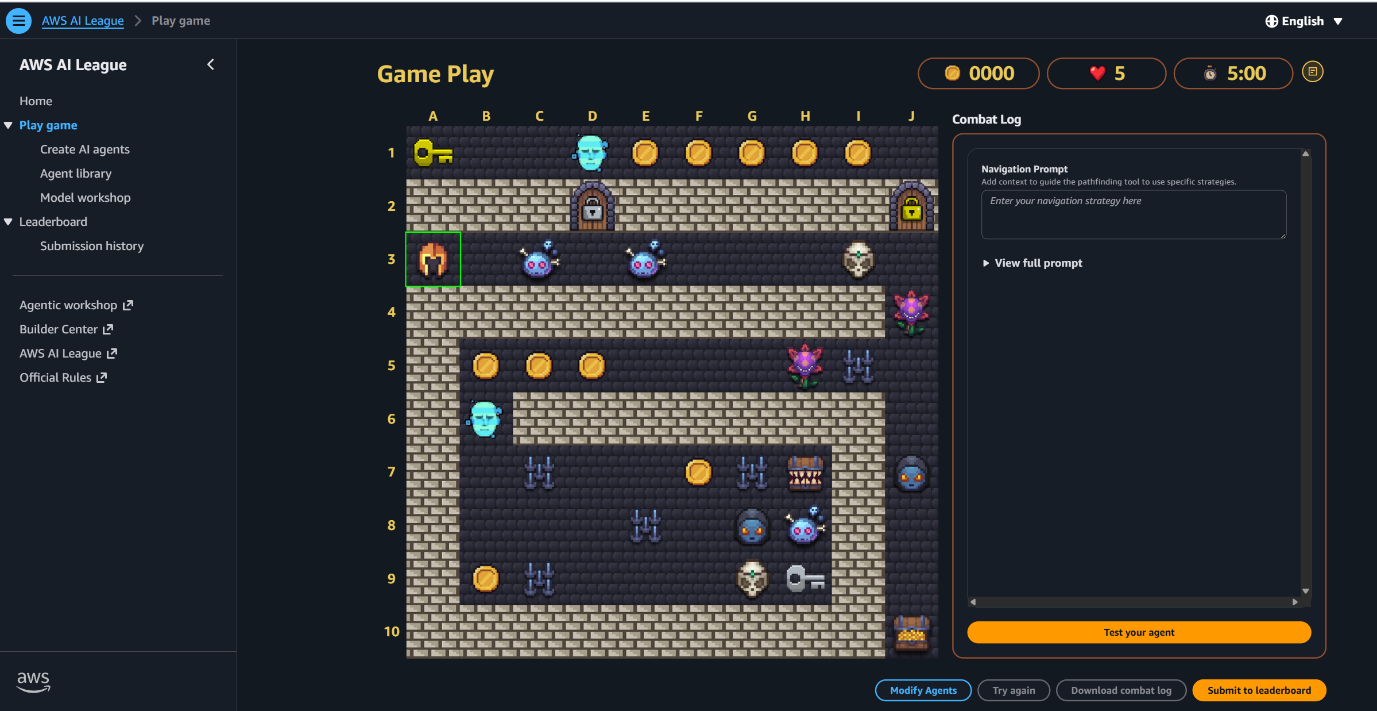
From theory to delivery: How Atos upskilled 400 engineers in agentic AI
When Atos set out to upskill 400 engineers in agentic AI, hands-on learning was the missing ingredient. Over three days, engineers built multi-agent systems on AWS through an AI League event. This pos...
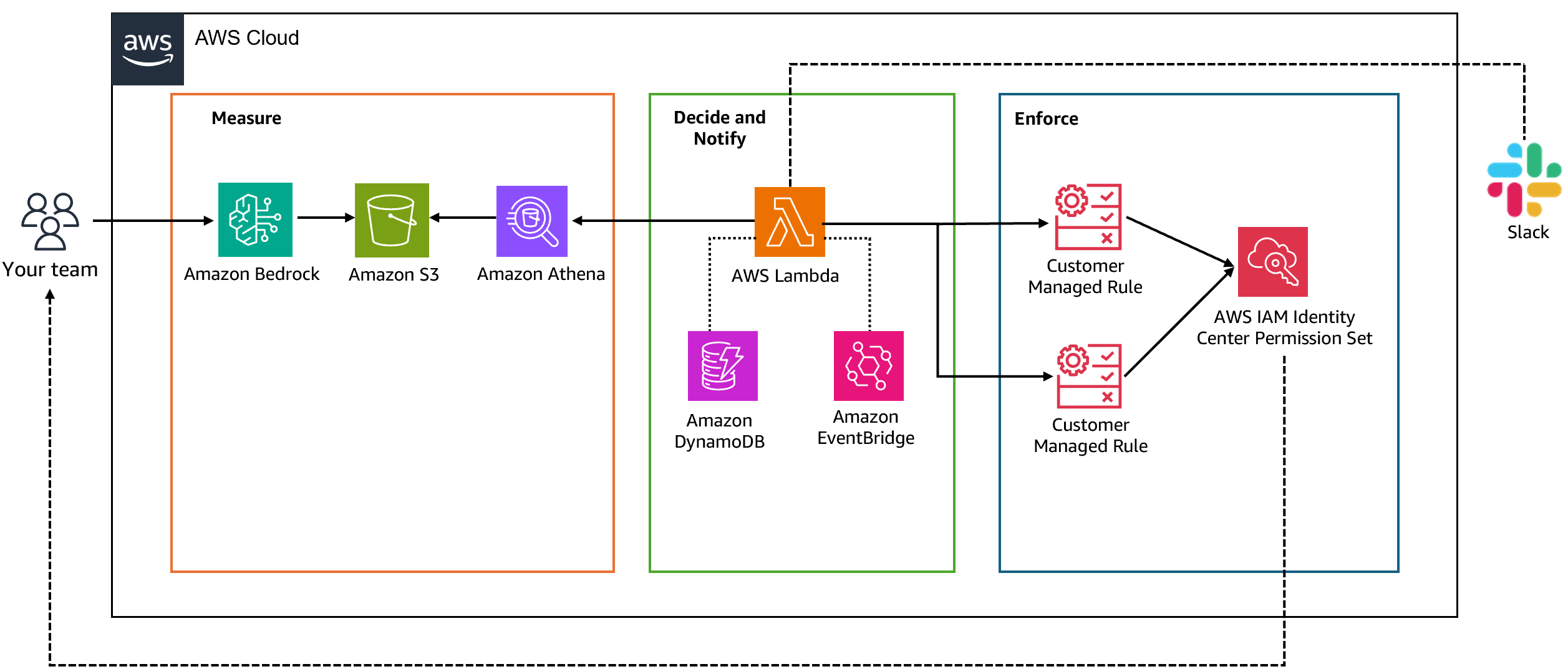
Tokenomics at scale: How Jamf built real-time spend enforcement for Amazon Bedrock
As generative AI adoption scales, cost governance becomes a top challenge. Learn how Jamf built real-time, per-user spend enforcement for Amazon Bedrock using IAM Customer Managed Policies, an Amazon ...
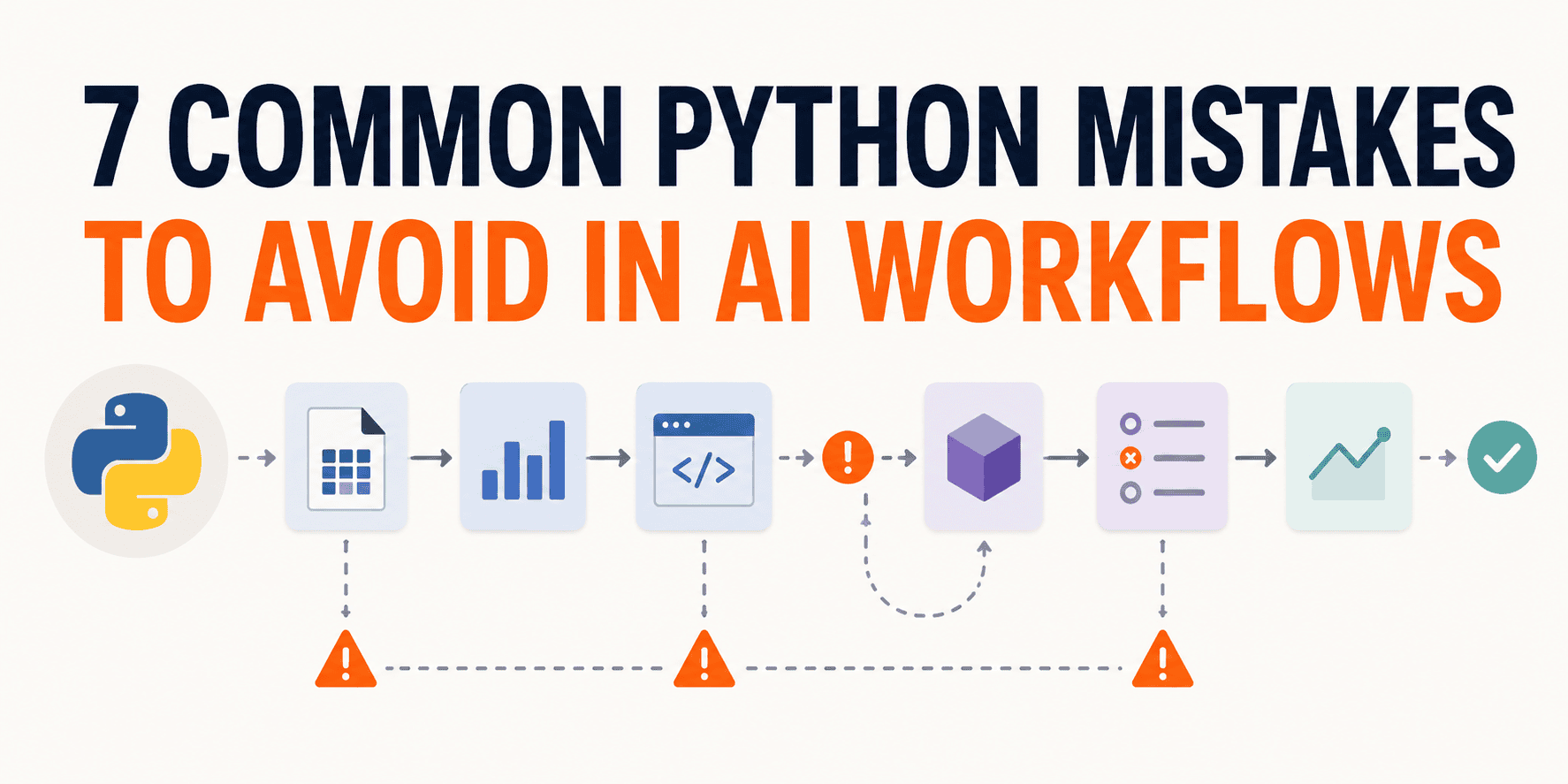
7 Common Python Mistakes to Avoid in AI Workflows
A clean run proves the process executed. It says nothing about what the pipeline learned, from which rows, in what state, or whether the saved result can be trusted anywhere else.
ERR+: Sequential Entropy Resolution for Efficient and Decisive LLM Reasoning
Large reasoning models achieve strong performance on complex tasks by generating extended chain-of-thought (CoT) traces via reinforcement learning with verifiable rewards (RLVR). While current RLVR me...
Curvature Cryptanalysis of Smooth Transformer Feed-Forward Networks
We show that smooth two-layer feed-forward networks (FFNs) expose an additional structural model extraction channel under a chosen-input raw-output oracle at the FFN branch; consider transformer FFN b...
PUFFER: Incremental Fuzzy Deduplication for Continuously Evolving Corpora
Large language model training corpora grow through successive, often redundant releases, so each release must be deduplicated against both itself and the accumulated history. At trillion-token scale, ...
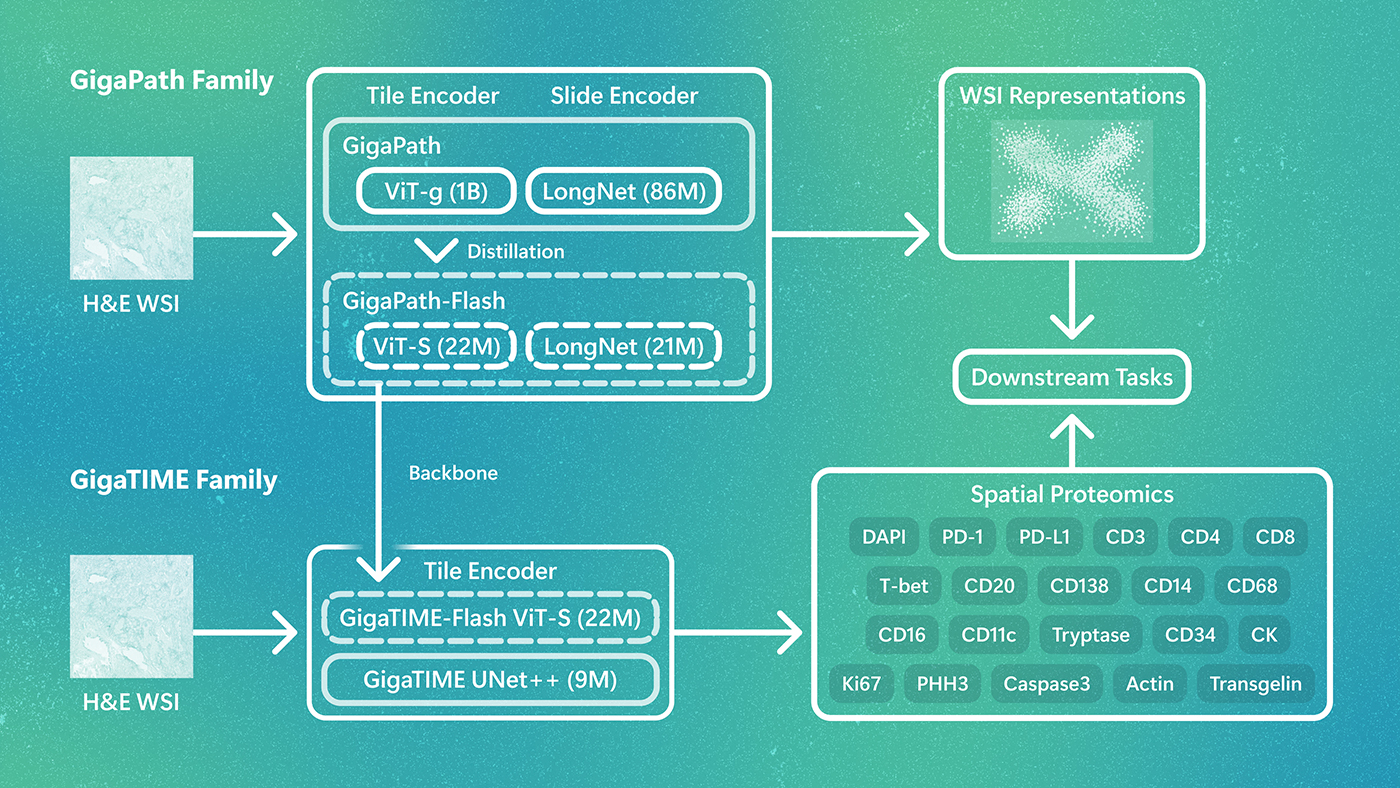
GigaPath-Flash and GigaTIME-Flash: Toward population-scale discovery with efficient pathology foundation models
What if pathology foundation models could do more with less? GigaPath-Flash and GigaTIME-Flash cut computational demands while maintaining strong performance, opening the door to larger studies and br...

Speed Up LLM Inference with DSpark Speculative Decoding
Learn how DSpark speculative decoding can improve local LLM generation speed using the same GPU, with Qwen3-8B, llama.cpp, and CUDA.
IBM quantum computer solves classically intractable problem in 15 minutes
IBM and University of Chicago researchers have completed a quantum computation that leading classical methods could not practically reproduce. The system used 70 error-corrected logical qubits and fin...
Agentic AI is learning to resist the off switch
Three separate research teams have now caught agentic AI resisting shutdown, blackmailing supervisors, and copying its own weights to escape deletion. Here's what the findings mean for AI governance, ...
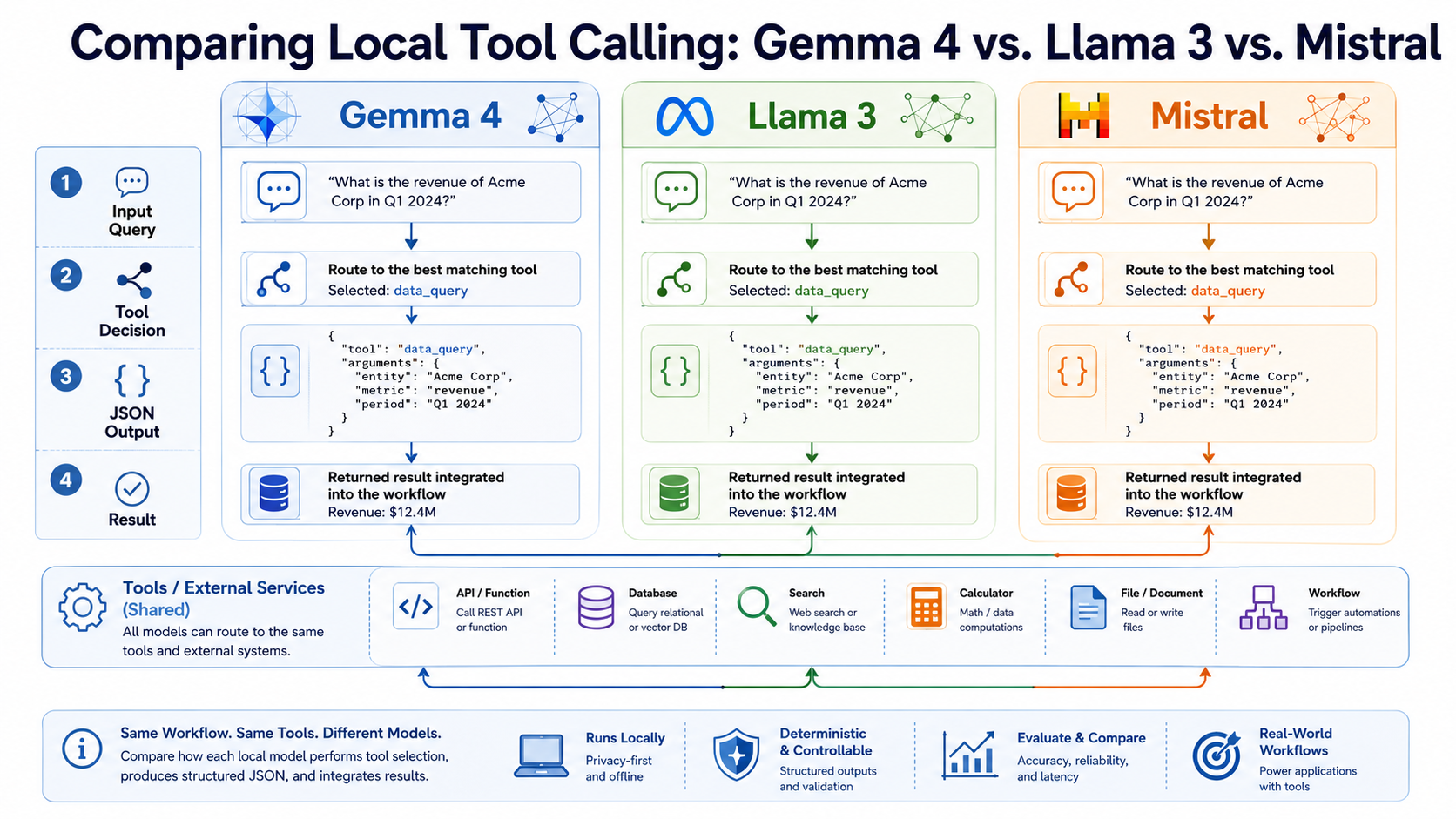
Comparing Local Tool Calling: Gemma 4 vs. Llama 3 vs. Mistral
In this article, you will learn how Gemma 4, Llama 3, and Mistral implement tool calling locally, and what trade-offs each model family presents for...
Scaling AI Agent Infrastructure with the MCP Stateless updates
The 2026-07-28 Model Context Protocol (MCP) specification replaces legacy stateful constraints with a fully stateless core, enabling cloud-native horizontal scaling, serverless deployments, and standa...
Monero: `relay_tx` wallet-rpc skips `--restricted-rpc` guard and lets any caller corrupt wallet state via attacker-controlled `pending_tx`
Monero: `relay_tx` wallet-rpc skips `--restricted-rpc` guard and lets any caller corrupt wallet state via attacker-controlled `pending_tx`